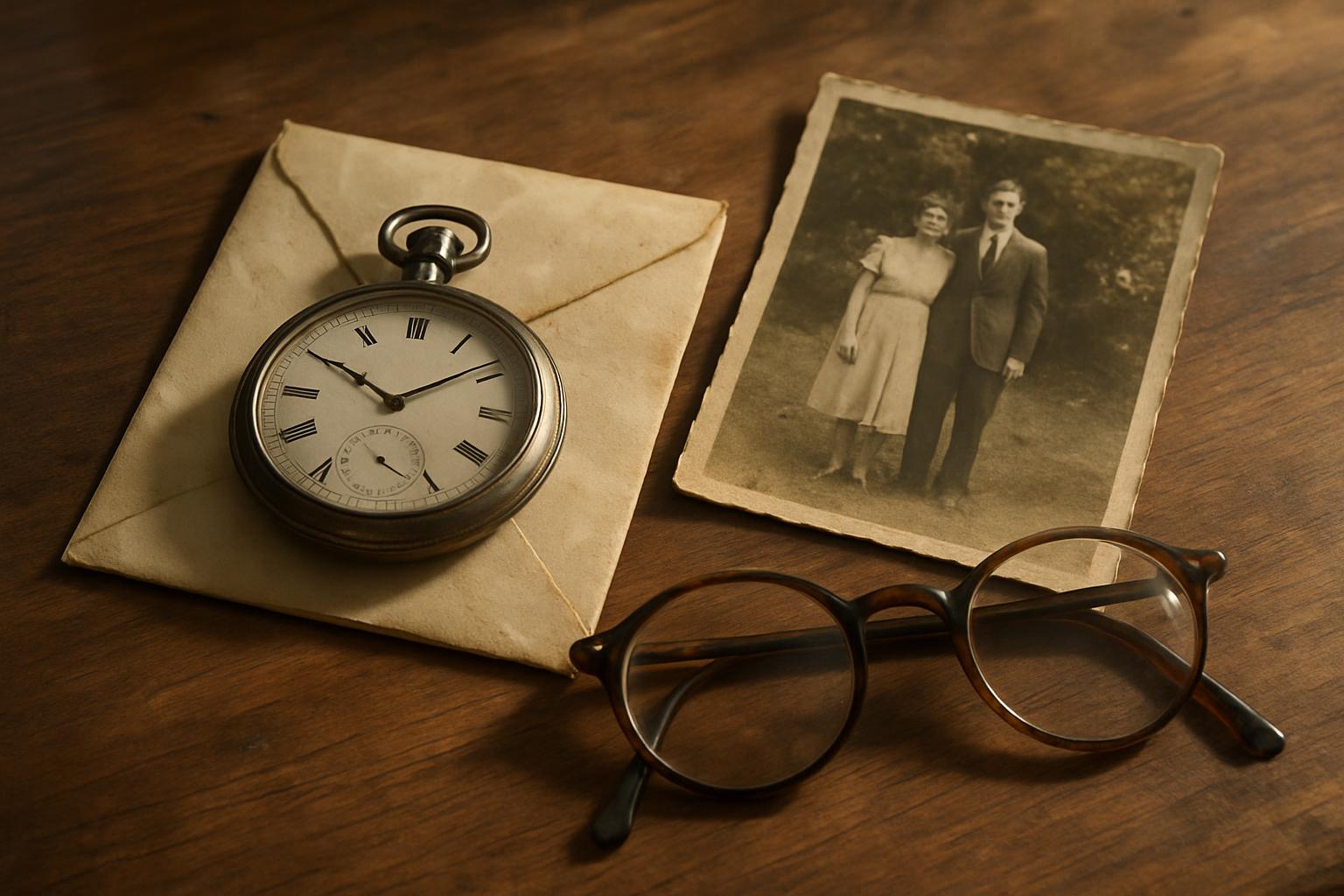
What should you include in your memoir? Include every scene that serves your central transformation — and cut everything that doesn't. That's the rule. It sounds simple until you're staring at a lifetime of memories and trying to decide which ones belong on the page.
This is where most memoir writers get stuck. Not from lack of material — from too much of it. Decades of experiences, relationships, turning points, and hard-won lessons. All of it feels important. Some of it is. Most of it isn't — at least, not for this particular book.
Here's how to figure out which is which.
Table of Contents
What a Memoir Is Not (And Why That Matters)
Memoir is not your life story. That's an autobiography — a chronological account of everything that happened, from birth to now. Memoir is something more specific: a focused story about a particular transformation, told through the scenes that made that transformation possible.
Think of it this way. The Glass Castle isn't Jeannette Walls's entire life. It's the story of how she came to understand her parents — and herself — in a way she couldn't as a kid. Wild isn't all of Cheryl Strayed's life either. It's eleven weeks on the Pacific Crest Trail, and what she went looking for there.
Once you accept that, the question of what to include becomes cleaner. You're not asking "is this memory important?" You're asking: "Does this scene show who I was, what changed me, or who I became?"
What Is the One Test Every Scene Must Pass?
Every scene in your memoir should answer yes to at least one of these questions:
- Does it show the person I was at the start — my beliefs, my blind spots, my wound?
- Does it show a moment that pushed my transformation forward?
- Does it show the person I became — or the insight I arrived at?
- Does it establish essential context that makes the transformation understandable?
If a scene doesn't pass at least one of these tests, it probably doesn't belong. Not because it isn't a good story. Because it's not this story.
This is the hardest thing to accept in memoir writing. You will have wonderful stories that don't belong in this book. Save them. Write them down. Maybe they go in the next one. But don't let them into this manuscript just because they're yours.
What Belongs in Your Memoir?
With that test in hand, here's a practical breakdown of what typically earns its place in a memoir.
The inciting moment
Every memoir has a moment — or a season — when the ground shifted. Something happened that made the ordinary life impossible to continue. A diagnosis. A loss. A decision. A confrontation you couldn't walk away from. This is where your story begins, not necessarily chronologically, but structurally. Your opening should drop the reader into proximity to this moment.
See how other writers handle this in The Opening Scene That Hooks Readers.
The scenes of resistance
Transformation doesn't happen in a straight line. Between the inciting moment and the resolution, your character — you — fights it, avoids it, fails, backtracks. These scenes of resistance are essential. They create tension. They show the real cost of change. Without them, your memoir becomes a triumph narrative, which is the least interesting version of any story.
Relationships that shaped the arc
The people who appear in your memoir should be there because they played a role in your transformation — for better or worse. The mentor who told you the truth you didn't want to hear. The relationship that showed you something about yourself you couldn't see alone. The person whose absence became its own kind of presence. People appear because they matter to the arc, not because they were important in your life generally.
The moment of change
This is the pivot point — the scene or realization that marks the turn. It doesn't have to be dramatic. It can be quiet. A conversation in a hospital room. A drive where something finally became clear. The moment matters because it's the hinge the whole story swings on. Don't rush past it or summarize it. Write it in full scene.
The resolution — not a happy ending, a transformed perspective
Your memoir doesn't need to end happily. It needs to end honestly. What did you understand at the end that you couldn't see at the beginning? That's the resolution. Not that everything worked out — that you changed. Readers forgive almost any story if the person telling it arrived somewhere real.
The System That Makes This Easier
MemoirMaster: How To Write A Memoir gives you the structural framework to map your arc before you write a single scene — so you know exactly what belongs and what doesn't before you invest months in a draft that has to be torn apart.
Get the Book →What Should You Leave Out of Your Memoir?
This is where most writers struggle. Cutting material you care about feels like lying by omission. It's not. It's editing. Here's what to cut without guilt.
Everything before the story actually starts
Memoir writers love backstory. They want to explain the family dynamics that led to the thing that led to the other thing that eventually led to the actual story. Resist this. Context can be woven in — a sentence here, a paragraph there. It doesn't need a dedicated section, and it definitely doesn't need to be the opening chapters.
The 10-Stage Memoir Structure shows you exactly where to drop your reader in — and it's rarely at the beginning of your life.
Scenes that are only historically accurate
This is a subtle one. You'll have memories that are factually important — they happened, they mattered — but that don't do anything structurally. They're just... true. Truth is not enough to earn a scene a place in your memoir. Ask what it's doing for the reader's understanding of your transformation. If the answer is "nothing," cut it.
People who don't serve the arc
You had a life full of people. Most of them don't need to be in this book. Including supporting characters who don't affect the arc creates confusion for readers and diffuses emotional energy that belongs on the main story. A neighbor you liked. A colleague you respected. A phase of friendships that didn't shape who you became. These can stay in your journals. They don't belong in your manuscript.
Emotional cataloguing without scene
One of the most common memoir mistakes is telling readers how you felt during a period of time instead of showing them a scene that makes them feel it too. "Those years were the hardest of my life" tells us nothing. The scene where you sat in your car for forty minutes before going into work tells us everything. Cut the emotional summary. Write the scene.
How Do You Handle the Hard Calls — People, Pain, and Private Details?
Some of what belongs in your memoir involves other people. Living people, sometimes. People who may not want to be in your book, or whose portrayal is complicated.
Here's my honest view on this: you have the right to tell your story. You don't have the right to tell other people's stories as if they were your own. The distinction matters. Write your experience, your perception, your emotional reality. You're not making claims about what someone else was thinking or what their intentions were. You're writing what you saw, felt, and understood — which is legitimately yours.
For names and identifying details, use your judgment. Some details need to stay. Others can be changed without compromising the truth of the scene. A disclaimer in the front matter that explains composite characters or name changes protects you and signals to readers that you've handled this thoughtfully.
For painful memories — the ones that cost you something to write — include them if they're essential to the arc. Don't include them just because they were hard. Hard is not the same as necessary. The test is the same: does this scene show who I was, what changed me, or who I became?
How Do You Set the Scope Before You Start Writing?
Everything above gets easier if you do one thing before you write a word: define the scope of your memoir.
That means answering these three questions:
- What is the central transformation? Who were you at the beginning of this story, and who are you at the end? What changed — in your beliefs, your identity, your understanding of something essential?
- What is the time frame? Your memoir covers a specific period, even if that period spans decades. Define it. "This memoir begins the summer my father got sick and ends the day I understood why he became who he was." That's a scope.
- What is the theme? Not the events — the meaning underneath the events. Identity. Belonging. Survival. Forgiveness. Love and its limits. Knowing the theme helps you recognize which scenes are on-topic and which aren't.
Once you have those three answers, the include/exclude question becomes much easier to navigate. You're not deciding what's interesting. You're deciding what serves this specific story — the one only you can tell, about the transformation only you lived.
And for a clear framework on separating memory from memoir content, this post is worth your time: Memory vs. Memoir: What's the Difference?
"A memoir is not a record of your life. It's a story about what your life taught you — and it needs to teach the reader something too."
The question of what to include always comes back to this. If a scene teaches the reader something about the human experience — through the specific lens of your transformation — it belongs. If it's just evidence that your life happened, it probably doesn't.
Want to Work Through This With a Group?
Figuring out your scope and your arc is one of those things that's much clearer when someone else is helping you see your own story. We're launching live memoir writing workshops soon — get on the list.
Ready to Write Your Memoir the Right Way?
MemoirMaster: How To Write A Memoir gives you the complete system — arc, structure, scope, scenes, and voice — built for people who have a story worth telling and want to tell it well. The map is waiting.
Get the Book →