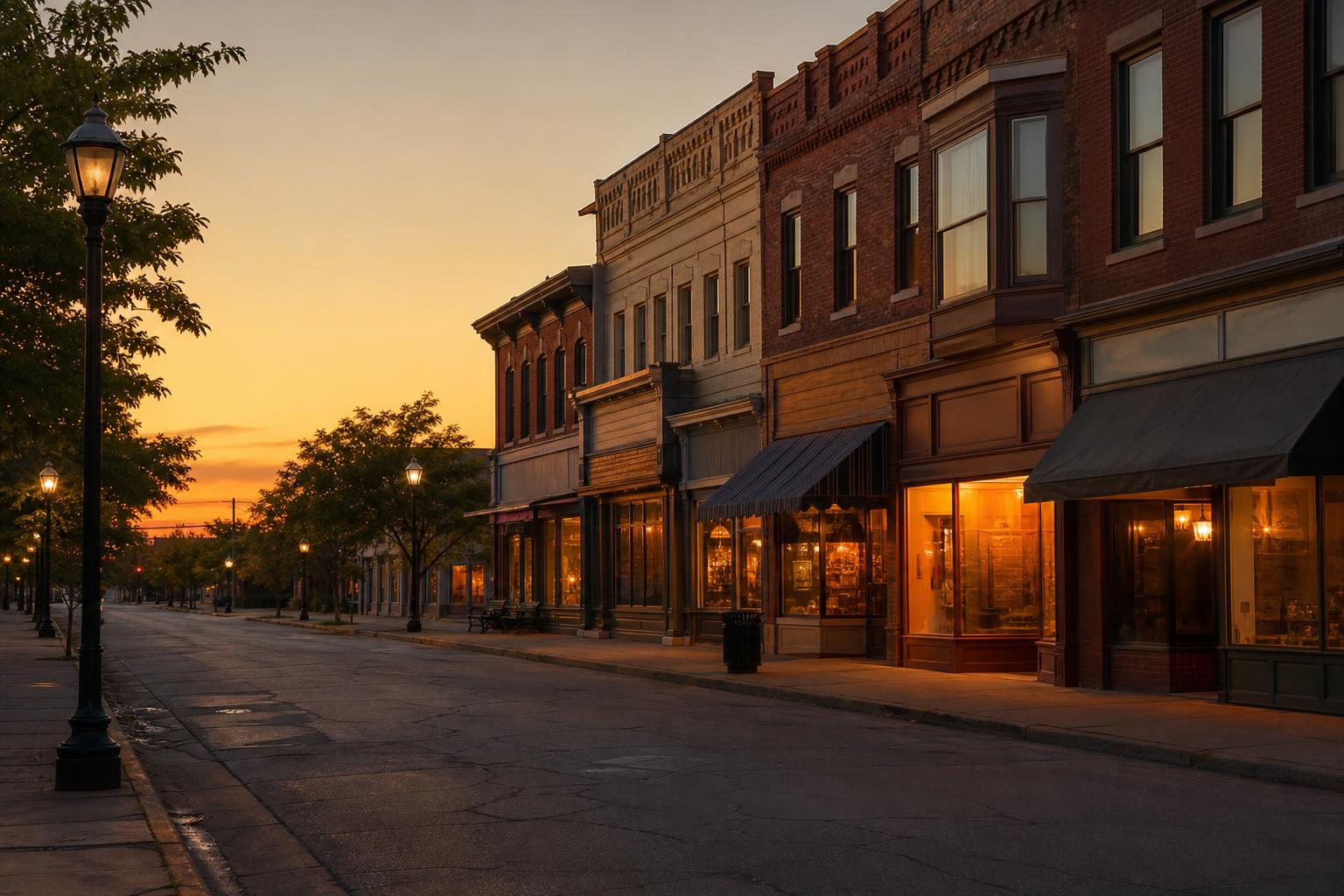
To write a memoir about your hometown, you have to stop thinking of it as a backdrop and start treating it as a character — one with a personality, contradictions, and a specific effect on who you became. Your hometown didn't just surround you. It shaped you. And that shaping is the story.
The mistake most writers make is trying to describe their hometown rather than inhabit it. They catalog the geography, name the streets, explain the history. But readers don't need a tour. They need to feel what it was like to be you in that particular place — what the air smelled like, what the people expected, what leaving cost, or what staying cost more.
Here's how to do it right.
What's in This Post
Your Hometown Is a Character, Not a Setting
Every great memoir has a cast of characters. In a hometown memoir, the place itself belongs on that list. It has a voice. It has expectations. It rewards certain behaviors and punishes others. It tells you who you are — or who you're supposed to be — before you're old enough to argue back.
Think about what your hometown stood for. Was it a place that celebrated ambition or distrusted it? Did it value staying or leaving? Was it shaped by an industry, a faith tradition, a particular kind of weather, or a shared wound from something that happened decades before you were born? All of that is character. All of that affected you.
When you write your hometown as a character, you ask the same questions you'd ask about any character: What does it want? What does it fear? How does it try to control the people inside it? What does it get right, and what does it get catastrophically wrong?
This reframe changes everything. Instead of writing about a place, you're writing about a relationship. And relationships — especially complicated ones — are what memoir is made of.
Sensory Detail Is Your Most Powerful Tool
Memory is stored in the senses. Not in summaries, not in conclusions — in the specific physical data of a moment. The way the pavement smelled after summer rain. The particular sound the school bell made. The quality of light in October. The taste of something you only ate there. These details don't just describe your hometown — they transport the reader into it.
This is where most hometown memoirs fall flat. Writers describe what their town looked like in broad strokes instead of building it scene by scene through sensory specificity. "It was a small, quiet town" tells a reader almost nothing. "The only sound on a Sunday morning was the church bell and the grocery store's screen door banging shut" puts them there.
For a deeper look at building scenes through sensory grounding, How Do I Write Scenes in My Memoir? walks through the technique step by step.
The more specific you get, the more universal your writing becomes. That's one of the paradoxes of good memoir. The reader doesn't need to have grown up where you did. They need to feel the texture of your experience — and texture comes from detail, not from explanation.
Write What Your Hometown Taught You
Every place teaches lessons. Some of them are worth keeping. Some of them took years to unlearn. A memoir about your hometown isn't a love letter or an indictment — it's an honest accounting of what living in that particular place did to your understanding of the world.
What did your hometown teach you about success? About failure? About who was worth knowing and who wasn't? About what men were supposed to do, or what women were supposed to want? About money, or the lack of it? About belonging?
Some of those lessons you absorbed without question. Others you fought. Some you carried into adulthood without realizing it until much later. That process of absorption, resistance, and eventual recognition is the emotional engine of a hometown memoir.
"The stories we inherit from a place are often the hardest to see clearly — because they feel like facts, not stories. Memoir is the work of separating the two."
Be honest about the lessons that shaped you in ways you're not proud of. Be equally honest about the ones that made you capable, resilient, or clear-eyed in ways that city people sometimes aren't. The goal isn't to settle a score with your hometown. The goal is to understand what happened to you there — and what you made of it.
If you're working through how to write about childhood as part of this, see What to Include in Your Memoir — it covers how to identify which memories belong in the draft and which are better left in the journal.
Ready to Turn Your Hometown's Story Into a Memoir?
A place as character. Sensory detail. Emotional truth. These are craft principles, and craft can be learned. How To Write A Memoir: Step-By-Step gives you the complete system for moving from scattered memories to a finished manuscript — one that readers will actually finish.
Get the Book + Workbook →The Leaving (or Staying) — Why It Matters
Almost every hometown memoir arrives at the same question: why did you leave, or why did you stay? Both are interesting. Both carry weight. But you have to actually answer the question — not just describe the circumstances, but excavate the real reason.
Leaving a hometown is never just logistics. It's a statement about who you think you are and who you refuse to become. Staying is equally charged — it's a choice about what you value, what you fear, and what you're willing to trade. The tension between the pull of a place and the pull of something else is one of the oldest stories in human experience, which is why readers connect to it so reliably.
If you left: what did you think you were escaping? What came with you anyway? What do you miss that you didn't expect to miss?
If you stayed: what kept you? Was it love, inertia, obligation, or a deliberate choice? What did you give up, and what did you protect?
These questions are not rhetorical. They're the structural heart of this kind of memoir. The answers — honest answers, not the tidy ones — are what make the difference between a memoir people finish and one they set down.
What to Include and What to Cut
A hometown memoir is not a history of the town. It's not an oral history of every person who lived there. It's the story of how that place shaped you — which means every scene, every character, every memory you include has to earn its place by serving that through-line.
Here's the test: if a memory or character doesn't connect to your central question — what did this place make of me, and what did I make of it? — it probably doesn't belong in the book. It might belong in a chapter. It might belong in a family archive. But a memoir has to stay focused on the transformation at its center, or it becomes a scrapbook.
- Include: Scenes that show the place's power over you — moments where the town's expectations collided with your own impulses.
- Include: The characters who embodied the town's values — the ones who were fully of that place, and what your relationship with them taught you.
- Include: Moments of rupture — when your hometown's story and your personal story stopped matching up.
- Cut: Historical background that a Google search could provide more accurately than your memory.
- Cut: Scenes that are nostalgic but don't serve the arc.
- Cut: Any passage where you're explaining the town to an outsider instead of living inside it.
The discipline of cutting is where memoirs get good. The first draft is for including everything. Every subsequent draft is for getting ruthless about what stays.
How to Actually Start Writing
Don't start with an overview. Don't start with "I grew up in..." Don't start with geography or demographics or a summary of the town's character. Start in a scene. Pick one specific moment, in one specific location, and put yourself there — fully, sensorially, honestly.
The overview and context can come later, embedded in scenes, delivered through action and detail rather than explanation. Readers don't need the orientation you think they need. They need to be pulled in. Once they're pulled in, they'll accept whatever context you give them.
A scene that works: the day you understood something about your hometown that you hadn't understood before. The day someone said something that cracked the story you'd been telling yourself. The day you realized you didn't fit — or the day you realized you did. Those moments of recognition are your starting points.
From there, the structure is a matter of deciding which moments belong in what order, and which thread connects them all. That's the craft work. And craft work is learnable — it's not something you're born with or not.
Want to work through this with a group? We're launching live memoir writing workshops soon — get on the list.
Your Hometown's Story Deserves to Be Told Right
The place that made you has stories worth preserving — but only if they're written with the craft to make a reader feel every detail. How To Write A Memoir: Step-By-Step gives you the complete system: structure, voice, scene-writing, and everything in between. Your hometown shaped you. Now shape the story back.
Get the Book + Workbook →