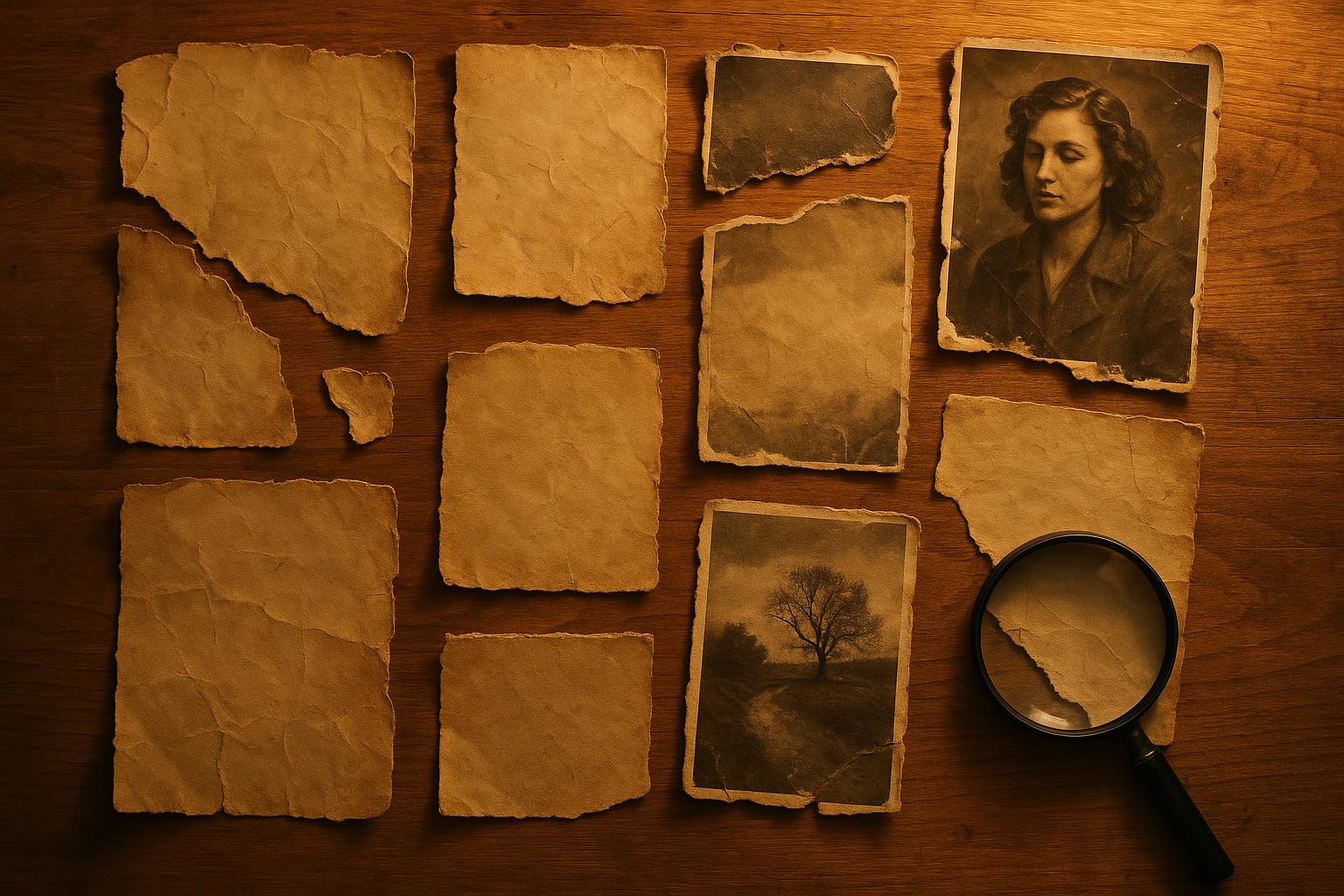
Yes — you can absolutely write a memoir if you have a bad memory. In fact, perfect recall is not a requirement for great memoir writing. What readers want isn't a transcript of your life. They want the emotional truth of your experience — and that, you have.
The belief that you need to remember everything is one of the most common reasons people never start. It's also one of the most easily dismantled. The best memoirists aren't people with photographic memories. They're people who understand what memoir actually is — and what it's asking for.
In This Post
- What Memoir Actually Needs From Your Memory
- Why Perfect Recall Can Actually Hurt Your Memoir
- Techniques to Recover What You Think You've Forgotten
- How to Handle Genuine Memory Gaps Honestly
- Reconstructing Dialogue: What's Allowed?
- Emotional Truth Is the Standard, Not Factual Accuracy
- Start Where You Remember Most Vividly
What Memoir Actually Needs From Your Memory
Here's the thing most people misunderstand about memoir: it's not trying to record what happened. It's trying to reveal what it meant.
Those are very different tasks — and they require very different things from your memory.
A documentary needs footage. A courtroom needs evidence. Memoir needs meaning. It needs the feeling of being in that kitchen during that argument. The sense of dread before a particular phone call. The moment something shifted and you knew — even if you couldn't articulate it yet — that you were becoming a different person.
You remember more than you think. You may not remember the exact dialogue from a dinner twenty years ago. But you remember how it felt to sit at that table. You remember whether the room felt safe or tense. You remember what was left unsaid and how it weighted the air. That's the material memoir is made of.
Why Perfect Recall Can Actually Hurt Your Memoir
This sounds counterintuitive, but bear with me: writers who remember everything sometimes produce worse memoirs than writers who remember less.
Why? Because memory and meaning are not the same thing. Someone with vivid recall of every detail can easily get lost in the details — including the ones that don't serve the story. They include the unnecessary scene because it happened. They spend pages on context that doesn't earn its place. They write a catalog of events rather than a shaped narrative.
The writer who doesn't remember everything has to ask a harder question: What do I remember — and why do I still remember it?
That question is actually the most useful question in memoir writing. The things that have stayed with you after twenty, forty, sixty years have stayed for a reason. They carry emotional weight. They mark turning points. They reveal something about who you were and who you became. The forgetting has done some of the editorial work for you — it's kept what mattered and let go of what didn't.
"Memory is not a recording device. It's an editor. And like every good editor, it keeps what the story needs."
Techniques to Recover What You Think You've Forgotten
Before you decide your memory is too poor to write a memoir, try these techniques. Most people are surprised by how much comes back.
1. Start With Sensory Details
The brain stores memories in multiple formats — and the sensory channels (smell, sound, texture, light) often unlock narrative memories that direct recall can't reach. Don't ask yourself "What happened at Thanksgiving 1987?" Ask: What did the house smell like? What did the table look like? What sounds were in the background? What were you wearing, and how did it feel?
Start writing the sensory environment, and the events often follow. This is one of the techniques I cover in depth using The 3 Questions That Unlock Any Memory — a framework for getting past surface recall and into the real material.
2. Interview Yourself Systematically
Most people try to remember by sitting and waiting. That's not how memory retrieval works. You need prompts. Structured questions that move through different lenses — who was there, what was the physical setting, what were the stakes, what were you afraid of, what were you hoping for.
How to Interview Yourself for Your Memoir walks through this process in detail. It's not therapy — it's a practical retrieval technique that surfaces scenes you genuinely thought were gone.
3. Use Objects, Photos, and Documents
Physical artifacts are memory triggers. Old photos. Letters. Report cards. A piece of jewelry. The smell of a particular soap. These aren't just props for nostalgia — they're access points to episodic memory. Sit with an old photograph and write what's not in the frame. That's where the memoir is.
4. Talk Before You Write
Some memories unlock through speaking before they unlock through writing. Have a conversation with someone who was there, or record yourself telling a story out loud. The act of narrating — even imperfectly — activates memories that the blank page can't reach. Transcribe your recording afterward. You'll often surprise yourself.
5. Write the Feeling First, the Facts Second
If you can't remember exactly what happened, start with what you felt. Write: "I remember feeling terrified" or "There was a specific kind of loneliness in that house." Then ask: What produced that feeling? What did it look like? Who was involved? Write toward the memory from its emotional center instead of its factual surface.
The System That Guides You Through Every Step
MemoirMaster: How To Write A Memoir includes frameworks for working with imperfect memory — how to use what you have, fill gaps honestly, and write scenes that are emotionally true without pretending to remember things you don't. You don't need a perfect memory. You need a system.
Get the Book →How to Handle Genuine Memory Gaps Honestly
There will be things you genuinely can't remember, and the right move is to say so — in the right way.
The phrase "as best I can recall" does a lot of work in memoir. So does "I don't remember her exact words, but the feeling was..." These are not apologies. They're a form of trust-building with the reader. You're telling them: I'm not making things up. I'm giving you the honest shape of my experience.
Readers accept this. What they don't accept is false precision — scenes that claim exact dialogue and documentary detail from forty years ago. The moments that feel most fabricated in memoir are often the ones where the writer is trying hardest to sound like they remember everything.
Honest uncertainty is more credible than false certainty. Every time.
Reconstructing Dialogue: What's Allowed?
This is the question almost every new memoirist asks. The short answer: reconstructed dialogue is standard and expected in memoir — with one condition.
You can write dialogue that reflects the spirit and tone of what was said, even if you don't have the exact words. You cannot invent content — things that were definitely not said, positions that were never held, events that never occurred. The line is between reconstruction and fabrication.
A useful test: would the people involved recognize this as a fair rendering of the exchange, even if the exact words are off? If yes, you're reconstructing. If they'd say "that never happened," you've crossed into fiction.
Most memoir readers understand this intuitively. They don't expect court reporter accuracy. They expect honest engagement. Check out Memory vs. Memoir: What's the Difference? for a deeper look at where the line falls and why it matters.
Emotional Truth Is the Standard, Not Factual Accuracy
Here's what the best memoir writers know — and what most beginners don't: the standard for memoir is emotional truth, not factual accuracy.
This doesn't mean you can lie. It means you're held to a different kind of honesty than a journalist or historian. You're not trying to prove what happened. You're trying to render how it felt to live through it — and why it shaped you the way it did.
That's a higher bar in some ways. Factual accuracy is easy to verify. Emotional truth requires real self-examination. It requires asking: What was I actually feeling, even if that feeling was ugly or unflattering? What was I actually afraid of? What did I want that I couldn't admit to wanting?
The writers who answer those questions honestly produce memoirs that last. The ones who fudge the emotional truth — even with perfect factual recall — produce memoirs that feel hollow.
Start Where You Remember Most Vividly
If you're worried about memory gaps, here's a practical solution: start with the scenes you remember most vividly.
Don't start at the beginning of your life. Don't start where the chronology says you should. Start where your memory is richest — the moments that have stayed with you so clearly you can still smell the room, hear the voices, feel the particular quality of light.
Those are almost always your most important scenes. Not because they're the most dramatic events of your life, but because your memory has flagged them as significant. Something about those moments matters in a way you may not have fully articulated yet. Your job as a memoirist is to find out what that is.
Write those scenes first. Let them show you what your memoir is really about. Then work forward and backward from there, filling in what you need and leaving out what you don't.
The Bottom Line
A bad memory is not a barrier to writing a memoir. It's a starting point.
What you remember — however imperfectly — is the raw material. The emotional residue of your experiences is still there, encoded in how you feel when you think about certain people, places, and periods of your life. That residue is what memoir is made of.
The techniques exist. The permission exists. What most writers with "bad memories" are really missing is a framework for working with what they have — a system that guides them from scattered emotional impressions to shaped, readable scenes.
That's exactly the problem the MemoirMaster system is built to solve.
Want to work through this with a group? We're launching live memoir writing workshops soon — get on the list.
Your Memory Is Enough. Start Here.
*MemoirMaster: How To Write A Memoir* gives you a complete system for turning your memories — however imperfect — into a finished manuscript. No perfect recall required. Just your honest experience and a framework to shape it.
Get the Book →