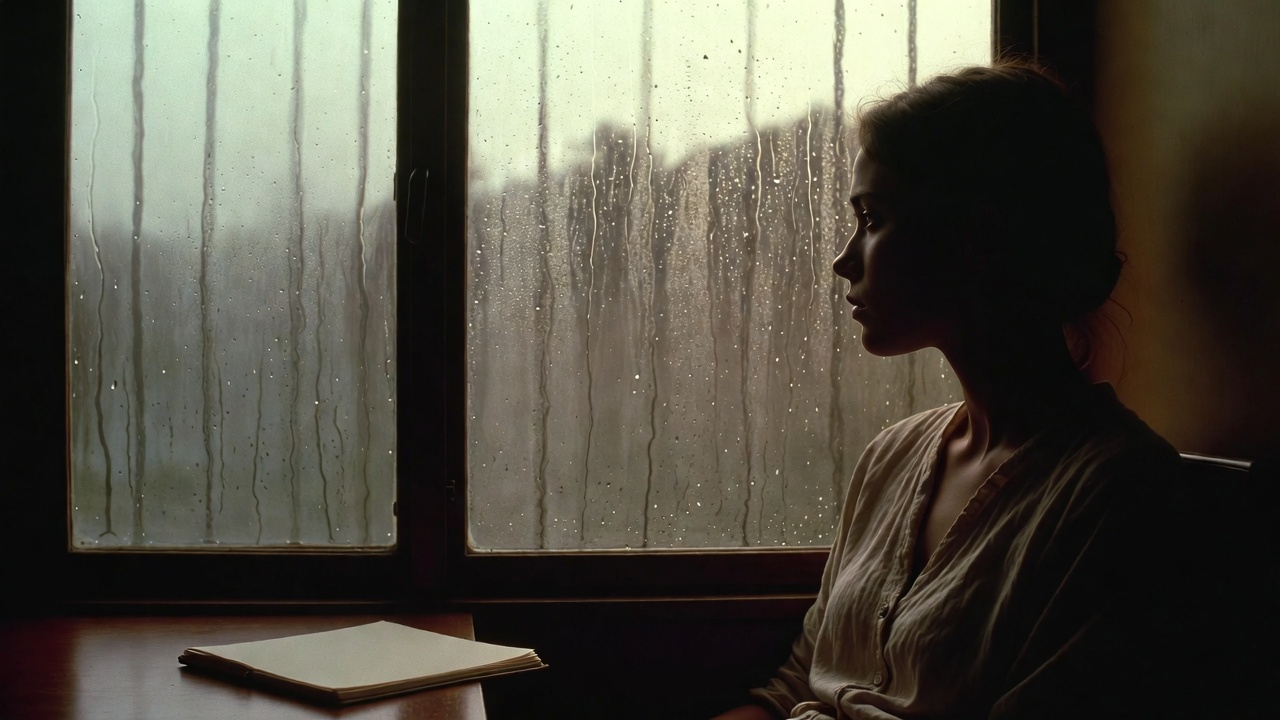
You sat down to write. And nothing came.
Not nothing as in a bad first sentence — nothing as in you stared at the screen for twenty minutes, opened a browser tab, made another cup of coffee, and convinced yourself you'd try again tomorrow. Tomorrow turned into next week. Next week turned into a creeping guilt that follows you around whenever someone asks how the memoir is going.
That's memoir writer's block. And it's more common than anyone admits.
Here's what almost nobody tells you: it's not a creativity problem. It's a structural one. And once you understand what's actually causing it, you can fix it faster than you think.
What's Really Happening When You're "Blocked"
Writer's block in memoir almost always traces back to one of three root causes. They feel identical from the outside — blank page, frozen hands, avoidance — but they have completely different solutions.
Root Cause #1: You Don't Know What Scene Comes Next
This is the most common one. You've been writing, and you've hit a moment where you genuinely don't know what belongs next. Do you flash back to childhood? Jump forward to the consequence? Introduce a new character? Include the fight you had that week or skip it?
When there's no map, every scene is a decision. And decision fatigue is real. After enough of those micro-decisions, your brain starts finding reasons not to sit down at all.
The fix isn't to try harder. It's to build the map. Spend one session — not writing scenes, but outlining the arc. What transformation is your memoir tracking? What are the ten to fifteen pivotal moments that trace that change? Once you have the sequence, each session becomes "write scene seven" instead of "figure out what comes next."
Root Cause #2: You're Avoiding an Emotionally Hard Scene
Sometimes the problem isn't that you don't know what comes next. You know exactly what comes next. You just don't want to write it.
The scenes that matter most in memoir are almost always the hardest to write — the ones where something broke, or you failed, or you did something you're not proud of, or someone you love was at their worst. These aren't scenes you approach casually. They take something out of you.
The brain is wired to protect you from emotional pain. Avoidance isn't weakness — it's your nervous system doing its job. But memoir is the work of looking directly at what happened and telling the truth about it.
"The memoir that tries to skip the hard parts ends up being a collection of pleasant memories — and nobody needs to read that."
The way through isn't to power through. It's to give yourself permission to write the hard scene badly. Write it rough, write it ugly, write it in pieces. You're not publishing the first draft. You're just getting the truth on the page so you can shape it later.
Ritual helps too. Some writers create a physical boundary around hard sessions — a specific location, a cup of something warm, a defined ending time. The ritual signals to your brain: we're going in, and we're coming back out.
Root Cause #3: You're Editing While You Write
This one is sneaky because it doesn't feel like avoidance. It feels like craft.
You write a paragraph. It's not quite right. You rewrite it. Still not right. You rewrite it again. You read back three pages to see if the tone is consistent. You rewrite the opening of the chapter. An hour passes and you've produced zero net new words.
The critical mind and the creative mind don't work at the same time. Trying to do both simultaneously is like driving with one foot on the gas and one foot on the brake. You burn fuel and go nowhere.
First draft writing has one rule: forward motion only. Write it wrong if you have to. Leave a note to yourself in brackets — [FIX THIS], [WRONG TONE], [EXPAND HERE] — and keep going. The first draft's job is to exist. The revision's job is to make it good.
Five Things to Do Right Now If You're Stuck
These aren't abstract advice. They're specific moves you can make today.
1. Write the scene you've been avoiding. Not the next scene in sequence — the one you've been circling for weeks without landing. Set a timer for thirty minutes. Write it badly. Get it on the page. Most of the avoidance vanishes once you've started.
2. Switch scenes entirely. Memoir doesn't have to be written in order. If you're stuck on scene seven, write scene twelve. Or write the last scene — the moment of resolution. Momentum from a scene that flows freely often unlocks a scene that was blocked.
3. Write toward the block, not around it. Ask yourself: what am I afraid to say here? Write the answer to that question. Sometimes the block itself is the content — the thing you're afraid to put down is exactly what needs to be in the book.
4. Change your writing medium. If you've been typing, write by hand. If you've been at a desk, go somewhere new. The brain associates environments with patterns of thought. A new environment breaks the stuck pattern and gives you access to something fresh.
5. Return to why. Read back the first chapter you wrote — or your notes about why you're writing this memoir at all. Why does this story need to exist? Who needs to read it? When you reconnect to the purpose, the tactical problem of "what comes next" often dissolves.
The Deeper Issue: Perfectionism Disguised as Standards
There's a version of memoir writer's block that doesn't come from not knowing what to write. It comes from believing what you write has to be good.
Good on the first try. Good enough that you'd let someone read it. Good enough that it sounds like the author you imagine yourself to be.
This is perfectionism. And it is the single most effective way to never finish your memoir.
Every published memoir you've ever admired went through drafts that would embarrass the author. Multiple drafts. Drafts where the chronology was wrong, the voice was inconsistent, the best scenes weren't yet written, and the whole thing felt like a mess. That's what first drafts are. They're not manuscripts — they're raw material.
Anne Lamott's famous concept of the "shitty first draft" isn't permission to write carelessly. It's permission to write at all. The standard for a first draft is one thing only: it exists. Everything else comes later.
What Sustained Progress Actually Looks Like
The writers who finish their memoirs aren't the ones who never get blocked. They're the ones who treat the block as information rather than failure.
Blocked because you don't know what comes next? That's a structure problem — build the map.
Blocked because a scene is emotionally hard? That's the scene that matters most — go there.
Blocked because nothing sounds right? That's your inner editor hijacking the first draft — turn it off.
Every block has a diagnosis. Every diagnosis has a solution. The stuck feeling isn't a sign that you can't do this — it's a signal pointing at exactly what needs to happen next.
You've lived a story worth telling. The writing is just the translation.
Keep Reading
- Why "Just Start Writing" Is the Worst Memoir Advice You'll Ever Get
- How to Structure Your Memoir in 10 Stages
- How to Write About Difficult Memories in Your Memoir
Don't Let the Block Win
MemoirMaster: How To Write A Memoir gives you the complete system — structure, scenes, voice, and arc — to take your memories from scattered notes to a finished manuscript worth reading. If you're serious about writing your story, this is where you start.
Get the Book →