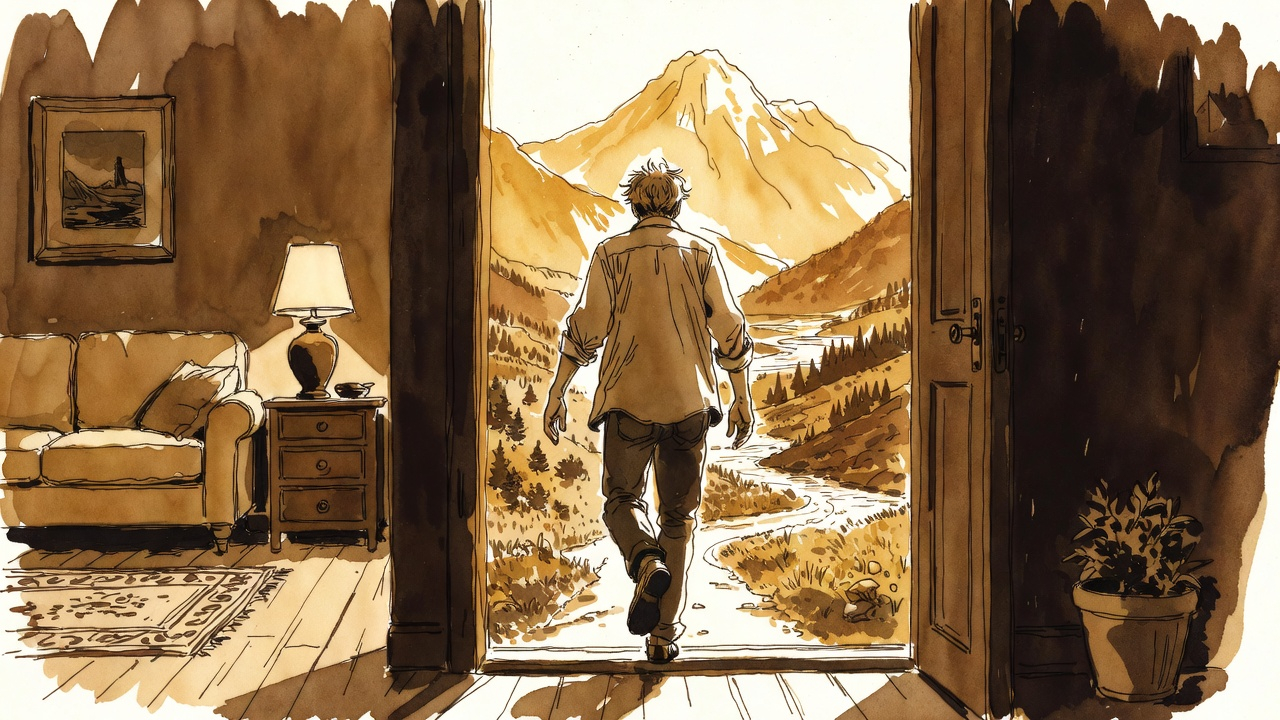
You've heard of the hero's journey. Maybe from a film class, a writing book, or that Joseph Campbell documentary you half-watched on a rainy afternoon. And you probably thought — yeah, that's for movies. That's for Rocky climbing the steps of the Philadelphia Museum of Art, or Dorothy clicking her ruby slippers. Not for me.
Here's what I want you to understand: your life is a hero's journey memoir. It already happened. You already lived it. You just haven't recognized the shape of it yet.
Finding your hero's journey in real life isn't about being dramatic or pretending you fought a dragon. It's about seeing your own story clearly — the transformation you went through, the challenges that changed you, the person you became on the other side. That's what makes a memoir worth reading. And that's exactly what we're going to walk through today.
What Is the Hero's Journey, Really?
Joseph Campbell spent decades studying myths, legends, and stories from cultures all over the world. And he noticed something remarkable: they all told the same story. A person living an ordinary life gets called into something bigger. They resist. They go anyway. They face trials, find allies, hit rock bottom — and come out the other side changed forever.
Campbell called this the monomyth. Hollywood calls it the hero's journey. And screenwriters have been using it ever since because it works.
Think about Rocky. Before the big fight, Rocky Balboa is a small-time club fighter collecting debts for a loan shark in South Philly. He's not a hero yet. He's just a guy with a dream and no real reason to believe in it. The call comes when he gets a shot at the title — something he never asked for. He resists (he almost turns it down). He trains, he suffers, he nearly gives up. And even though the scorecards don't give him the win, he goes the distance. He becomes someone new.
Or think about Up. Carl Fredricksen is a 78-year-old man who has already lived a full life — and lost his greatest love. He ties balloons to his house and floats away. That's his call to adventure. And what unfolds is one of the most moving hero's journeys ever put on screen, built entirely around grief, memory, and the courage to keep living.
Or The Wizard of Oz. Dorothy doesn't want to be a hero. She just wants to go home. But the journey transforms her — and by the end, she realizes that what she was looking for was never somewhere over the rainbow. It was with her all along.
Every one of these stories follows the same arc. And here's the thing: so does yours.
Why Real Lives Follow the Same Pattern
Campbell's insight wasn't just about stories. It was about human psychology. We are wired for transformation. Every major chapter of a life — a career change, a health crisis, a loss, a marriage, an immigration, a recovery — has this shape baked into it.
There's a before. There's a disruption. There's a struggle. And there's an after — a version of you that couldn't have existed without going through it.
This isn't a theory. It's just how life works.
The retired nurse who spent forty years caring for others, then faced her own cancer diagnosis — and came out with a completely different understanding of what healing means. That's a hero's journey in real life.
The man who emigrated from another country at 30, spoke no English, built a business from scratch, and raised a family in a place that didn't feel like home — until suddenly it did. That's a hero's journey.
The woman who spent three decades in a marriage that wasn't quite right, finally found the courage to leave at 62, and discovered herself for the first time in her life. Hero's journey.
Your story is in there too. You just need to find it.
How to Find Your Hero's Journey in Real Life
Most people who want to write a memoir get stuck at the very beginning because they're thinking too broadly. "My whole life is the story." But the hero's journey isn't your whole life. It's one arc within your life — the one that changed you most.
Here's how to find it. Ask yourself these three questions:
1. When did everything change?
There's a moment — maybe more than one — when your life divided itself into before and after. A diagnosis. A death. A job loss. A retirement. A move across the country. A child leaving home. An unexpected opportunity that terrified you.
That moment is your Call to Adventure. In Rocky, it's the phone call offering him the fight. In The Wizard of Oz, it's the tornado. In your life, it might be something quieter — a doctor's appointment that changed everything, or the day you handed in your retirement papers and walked out of an office for the last time.
Write it down. Be specific. What happened? When? Where were you standing?
2. Who were you before that moment — and who are you now?
This is the heart of any memoir transformation story. The distance between who you were and who you became is your story.
Before the change: What did you believe about yourself? What were your assumptions about how life worked? What were you afraid of? What mattered to you?
After: How did those things shift? What do you know now that you couldn't have known before? What did you lose — and what did you find?
Don't rush this. Sit with it. The gap between your "before" self and your "after" self is where the memoir lives.
3. What was the hardest moment?
Every hero's journey has a rock-bottom point. Campbell called it the "Ordeal" — the moment when things get as bad as they're going to get, when the hero isn't sure they'll make it through.
In your life, this might be a moment of total despair, or a decision you had to make with no good options, or the night you lay awake wondering how you'd survive what was coming.
That moment belongs in your memoir. Not to wallow in it, but because that's where the transformation happens. That's where your readers will lean in — because they've had their own versions of that night, and they need to see that someone came through it.
You Don't Have to Be Extraordinary — You Have to Be Honest
One of the biggest misconceptions about the hero's journey is that the hero has to be special. Chosen. Exceptional in some obvious way.
But look at Rocky again. He's not the best fighter. He's not even close. What makes him a hero is that he shows up. He does the work. He keeps going when everything in him says to stop.
That's accessible. That's human. That's you.
The hero's journey in real life doesn't require you to have climbed Everest or survived a war (though if you did, those make great memoirs). It requires you to have lived with intention — to have faced something difficult and come out changed.
"You don't have to be remarkable. You have to be real. That's what makes a memoir worth reading."
What readers respond to — what your family will respond to when they read your memoir — isn't your achievements. It's your honesty. The moments where you didn't know what to do. The fears you kept secret. The way you found your footing again.
That's the hero's journey. And everyone who has lived long enough has one.
Putting It Together: Your Memoir's Arc
Once you can see your hero's journey — the call, the struggle, the transformation — you have the spine of your memoir. Everything else hangs off that spine.
At MemoirMaster, we break this arc down into a 10-stage system for structuring your memoir. It walks you through everything from "Your World Before" all the way to "The Legacy You Leave" — each stage a distinct beat in the hero's journey that translates directly into your real life story.
The 10 stages aren't a rigid formula. They're a map. And when you've got a map, you stop feeling lost.
Here's a simplified version of the arc to start with:
- Your ordinary world — life before the disruption
- The call — what changed, what started the journey
- The resistance — why you hesitated, what you were afraid of
- The leap — when you committed, ready or not
- The trials — the hard stretch, the lessons, the allies who helped
- The ordeal — rock bottom, the moment everything hung in the balance
- The turn — something shifts, you find a new way forward
- The return — coming back changed, reintegrating into life
- The reflection — what it all meant
- The legacy — what you want to leave behind
You have lived all ten of these stages. Maybe more than once. The work of writing your memoir is recognizing them — and then telling the story with honesty and care.
One More Thing Before You Start Writing
A lot of people in their 60s, 70s, and beyond resist the word "hero" when it comes to their own lives. They'll say things like, "I didn't do anything special," or "There are real heroes out there — I'm not one of them."
I hear that. And I want to push back on it gently.
You raised children in a world that was constantly changing around you. You built something — a career, a family, a community — from scratch. You survived losses that would have broken other people. You adapted. You kept going. You found ways to love and be loved even when it was hard.
That's not ordinary. That's a life fully lived.
The hero's journey isn't about being fearless. Dorothy was terrified the whole time in Oz. Rocky threw up before the fight. Carl in Up almost turned around and went home. Heroes are scared. They do it anyway.
So do you. So did you.
Your memoir is the story of that journey — the real one, the one that happened in kitchens and hospital waiting rooms and long drives and quiet moments of grace. It's worth writing. It's worth reading. And the people who love you deserve to have it.
The only question now is where to start.
Ready to Find Your Hero's Journey?
MemoirMaster: How To Write A Memoir gives you the complete system — structure, scenes, voice, and arc — to take your memories from scattered notes to a finished manuscript worth reading. If you're serious about writing your story, this is where you start.
Get the Book →